Written-Off Car with No Insurance in South Africa: Legal Options, Code Classifications, and Maximising Recovery Value
What You Should Know First
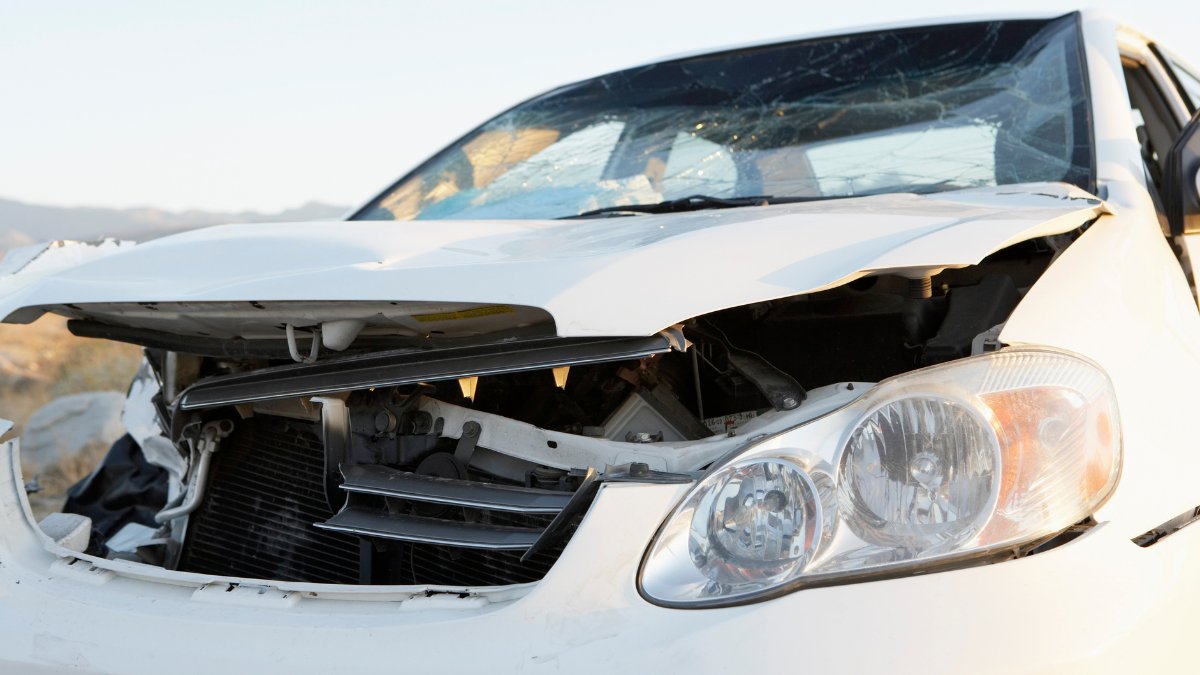
If your vehicle suffers severe accident damage, mechanical failure, or flood damage without comprehensive insurance in South Africa, you are personally responsible for managing its legal status on eNaTIS and disposing of the salvage asset.
In South Africa, vehicle damage is legally classified under the South African Insurance Association (SAIA) and National Road Traffic Act 93 of 1996 code structure into Code 2 (Used/Repaired), Code 3 (Rebuilt), Code 3A (Spare Parts Only), and Code 4 (Scrap/Permanently Demolished).
Uninsured owners can legally sell their damaged vehicle directly to a specialised salvage buyer like Sell Your Damaged Car without paying expensive workshop repair bills or storage fees. SYDC handles free nationwide vehicle collection, assists with eNaTIS deregistration documents (NCO/ADV forms), and pays cash directly to the vehicle owner.
Sell To Us. Real Payment, Real People
1. The Uninsured Crash Reality in South Africa
According to statistics from the AA (Automobile Association of South Africa) and the South African Insurance Association (SAIA), up to 65% to 70% of vehicles registered on South African roads are uninsured.
When an uninsured vehicle is involved in a severe crash, mechanical breakdown (e.g., snapped timing belt, engine block failure), or flood event, the financial shock falls entirely on the owner:
- Towing & Storage Charges: Panel beaters and impound yards charge between R1,500 and R3,500 for initial towing, plus daily storage charges ranging from R250 to R500 per day.
- Prohibitive OEM Repair Quotes: Franchise dealerships and structural repair shops routinely quote R80,000 to R200,000+ for structural realignment and airbag replacement.
- Legal Administrative Obligations: Under the National Road Traffic Act 93 of 1996, vehicle owners must maintain registration accuracy or formally deregister permanently unroadworthy vehicles on eNaTIS to prevent identity fraud and fraudulent traffic fine liability.
2. Decoding South African Vehicle Code Classifications (SAIA & eNaTIS)
Understanding your vehicle's exact legal status is essential when negotiating salvage value and managing eNaTIS paperwork. South Africa uses a 4-tier code classification system enforced by SAIA guidelines and Department of Transport licensing departments:
| Vehicle Code Status | Legal Definition | Road Re-Integration Status | Inspection Requirements | Salvage Buyer Value Realisation |
|---|---|---|---|---|
| Code 2 (Used Vehicle) | Vehicle damaged but structural integrity intact; economically or mechanically repairable. | Fully legal to drive on public roads after repairs. | Standard Roadworthy Certificate (CoR) upon transfer. | Highest Value Recovery Prime candidate for direct private salvage purchase. |
| Code 3 (Rebuilt Vehicle) | Structural total loss or severe accident damage; written off by insurer or owner. | Can return to road ONLY after certified rebuild & SAPS clearance. | SAPS VIN Clearance, 3D Chassis Alignment test, and Roadworthy Certificate. | Moderate Value Recovery Purchased for professional structural rebuild or core salvage. |
| Code 3A (Spare Parts Only) | Severe structural compromise or fire damage; unsafe for road re-integration. | PERMANENTLY BANNED from road registration. | Cannot be re-registered on eNaTIS under any circumstances. | Parts Value Recovery Sold strictly to authorised auto-breakers for spares. |
| Code 4 (Scrap / Demolished) | Permanently crushed, melted, or dismantled into scrap metal. | PERMANENTLY CANCELLED on eNaTIS database. | Stripped of VIN tag and crushed by registered scrap processor. | Scrap Value Recovery Calculated strictly by weight per ton of scrap steel. |
3. Uninsured Written-Off Vehicles: What Are Your Legal Options?
When your uninsured vehicle is damaged beyond economic repair, you face three primary pathways:
Option A: Attempting a Private Repair
- Pros: Keeps the vehicle in your possession.
- Cons: Structural repairs, airbag replacements (R15,000–R30,000 per airbag module), and ECU recoding often exceed the vehicle's post-repair market value. High risk of poor workmanship, hidden chassis defects, and failed roadworthy tests.
Option B: Selling to a Local Scrap Yard by Weight
- Pros: Immediate removal of the vehicle.
- Cons: Local scrap metal yards purchase vehicles based on scrap metal weight (typically R1.50 to R2.50 per kg). A 1,300 kg vehicle yields only R2,000 to R3,250, completely ignoring engine components, transmission modules, undamaged body panels, and interior electronics.
Informal scrap yards rarely provide proper eNaTIS deregistration assistance, leaving you legally liable for annual vehicle licence renewals and back-dated penalties.
Option C: Selling Directly to Sell Your Damaged Car
- Pros: Maximum Cash Recovery. SYDC evaluates the vehicle as a complete salvage asset, valuing functional components, drivetrain electronics, usable panels, and repairable structural value rather than raw scrap weight.
Includes:
- Free nationwide towing from workshops, residential properties, or impound yards.
- Free assistance with eNaTIS Notification of Change of Ownership (NCO) or Application for Deregistration (ADV).
- Immediate direct cash payout via secure EFT before vehicle collection.
4. How to Properly Deregister or Transfer an Uninsured Damaged Vehicle on eNaTIS
To protect yourself from ongoing motor vehicle licence fee liability, traffic fines, and identity fraud, you must follow official Department of Transport procedures when selling or scrapping a damaged vehicle.
Key Forms Required at the Licensing Department (DLTC)
- Yellow Form (NCO – Notification of Change of Ownership): Used when selling a Code 2 or Code 3 vehicle to a registered salvage company like SYDC.
- Blue Form (ADV – Application for Deregistration of Vehicle): Used if the vehicle is being permanently deregistered as a Code 3A or Code 4 scrap asset.
- Certified ID Copy of Owner & Original Registration Document (RC1): Proof of title ownership.
Step-by-Step Sale and Transfer Process with SYDC
- Step 1: Request Online Valuation
Provide vehicle details, location, and photos of the damage via website or WhatsApp. - Step 2: Receive Binding Cash Offer
SYDC calculates a specialised salvage offer (always significantly higher than scrap weight value). - Step 3: Secure Cash Payment
SYDC completes an instant electronic funds transfer (EFT) directly into your bank account. - Step 4: Sign Ownership Transfer Docs (NCO)
SYDC provides and assists with official NCO documentation to transfer title responsibility. - Step 5: Free Towing & Recovery
SYDC dispatches flatbed towing to collect the vehicle from your home, workshop, or storage facility.
5. Maximising Recovery Value: Why 2007+ Models Fetch Premium Salvage Offers
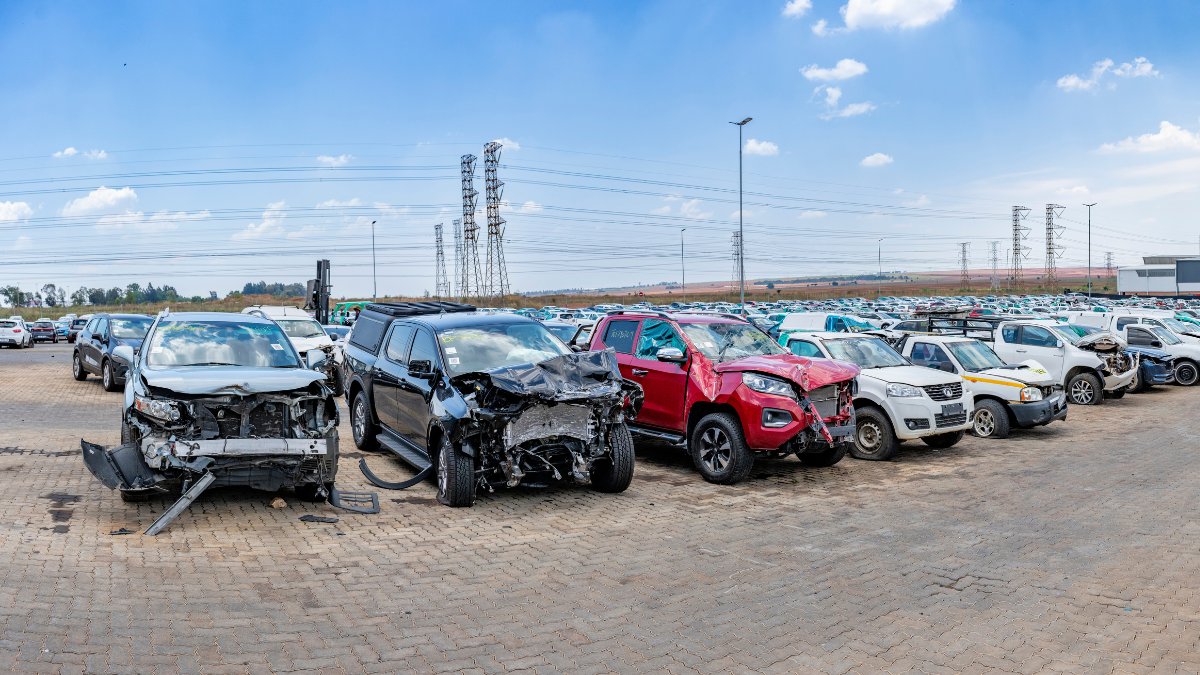
If your uninsured damaged vehicle is a 2007 model year or newer with an estimated pre-accident retail value between R100,000 and R150,000+, its salvage value is substantial.
High-Value Components Salvage Buyers Value
- Engine & Drivetrain: Complete engine blocks, turbochargers, fuel injection systems, and automatic/DSG gearboxes.
- Electronic Control Units (ECUs): Engine management modules, ABS pumps, and wiring harnesses.
- Body & Interior Panels: Undamaged doors, tailgates, leather seats, instrument clusters, and alloy wheels.
- Catalytic Converters & Exhaust Systems: OEM catalytic systems containing precious metals (platinum, palladium, rhodium).
6. Frequently Asked Questions About Selling Written-Off Cars
1. What happens if I don't deregister a written-off uninsured vehicle?
If a damaged vehicle remains registered in your name on eNaTIS without formal deregistration or change of ownership:
- Annual vehicle licensing fees continue to accumulate.
- You will incur monthly late-renewal penalties.
- You cannot renew licence discs for your other active vehicles until all back-dated fees on the damaged car are paid in full.
2. How is Code 3 different from Code 4 in South Africa?
- Code 3: The vehicle is a structural write-off, but it can legally return to the road if it undergoes a certified structural rebuild, 3D chassis alignment, SAPS VIN clearance, and official roadworthy testing.
- Code 4: The vehicle is permanently scrapped, crushed, or demolished and can never legally be re-registered or driven on South African roads.
3. Can I sell my damaged car if I lost the original eNaTIS RC1 logbook?
Yes. If your original registration document is lost or damaged, Sell Your Damaged Car guides you through obtaining a duplicate registration certificate from the Registering Authority (DLTC) or managing official affidavit declarations to facilitate a legal transaction.
4. Does Sell Your Damaged Car charge for towing an uninsured non-runner?
No. All towing and vehicle recovery costs are 100% free nationwide across all nine South African provinces (Gauteng, Western Cape, KwaZulu-Natal, Eastern Cape, Free State, Mpumalanga, Limpopo, North West, and Northern Cape).
5. How quickly do I receive cash for my uninsured written-off vehicle?
Payment is made immediately via electronic transfer (EFT) before or at the time of vehicle collection.
References
- National Road Traffic Act 93 of 1996: Vehicle Registration and Licensing Regulations. gov.za / DoT
- eNaTIS (National Traffic Information System): Vehicle Deregistration & Ownership Transfer Forms (NCO/ADV). enatis.com
- South African Insurance Association (SAIA): Code of Conduct for Salvage Classification (Codes 2, 3, 3A, 4). saia.co.za